Text to SQL
Natural Language Querying · SQL Generation · Data Visualization · Dashboard Automation
Enterprise Software · Business Intelligence · Data Analytics
8–10 Weeks (Estimated)
India
Turning Natural Language into Database Insights & Interactive Dashboards.
A conversational interface that converts natural-language questions into accurate SQL queries, tabular results, and interactive charts without requiring manual coding.

Making Database Access Simpler with Natural Language.
Business data is often stored across relational databases containing thousands of records and multiple interconnected tables.
Traditionally, extracting information requires users to understand SQL syntax, database schemas, table relationships, joins, filters, aggregations, and other database concepts. This can create a dependency on developers, database administrators, or data analysts for everyday information requests.
The proposed Text to SQL solution provides a natural-language interface between users and databases. The system understands the user's question, identifies the relevant tables and fields, generates SQL, validates the query, executes it against the connected database, and returns the results.
This creates a conversational way to explore business data without requiring users to manually write SQL statements.
Challenges in Traditional Database Querying
Many businesses depend on databases to manage daily operations. However, extracting useful information from those databases can be difficult for users who do not have technical SQL knowledge.
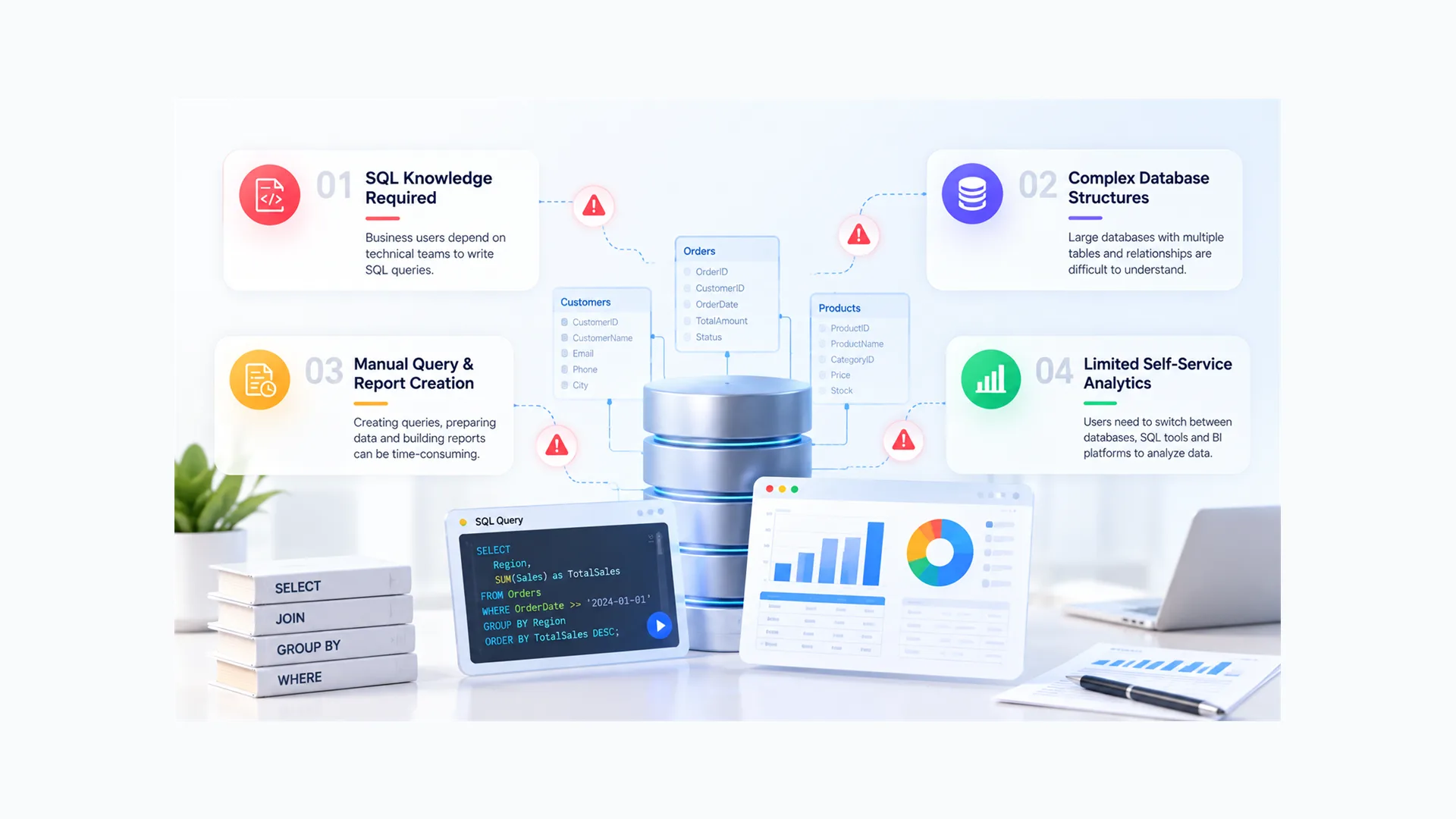
SQL Knowledge Required
Users often need knowledge of SQL syntax and database structures to retrieve information.
Complex Database Structures
Enterprise databases may contain hundreds of tables, relationships, and business-specific fields.
Manual Query Creation
Analysts and developers may repeatedly create similar queries for operational reports and business questions.
Data Access Bottlenecks
Non-technical users may need to request reports or information from technical teams.
Four Phases. From Database Connection to Natural-Language Insights.
The proposed solution follows four phases to convert everyday questions into usable database queries while maintaining control over data access and query execution.
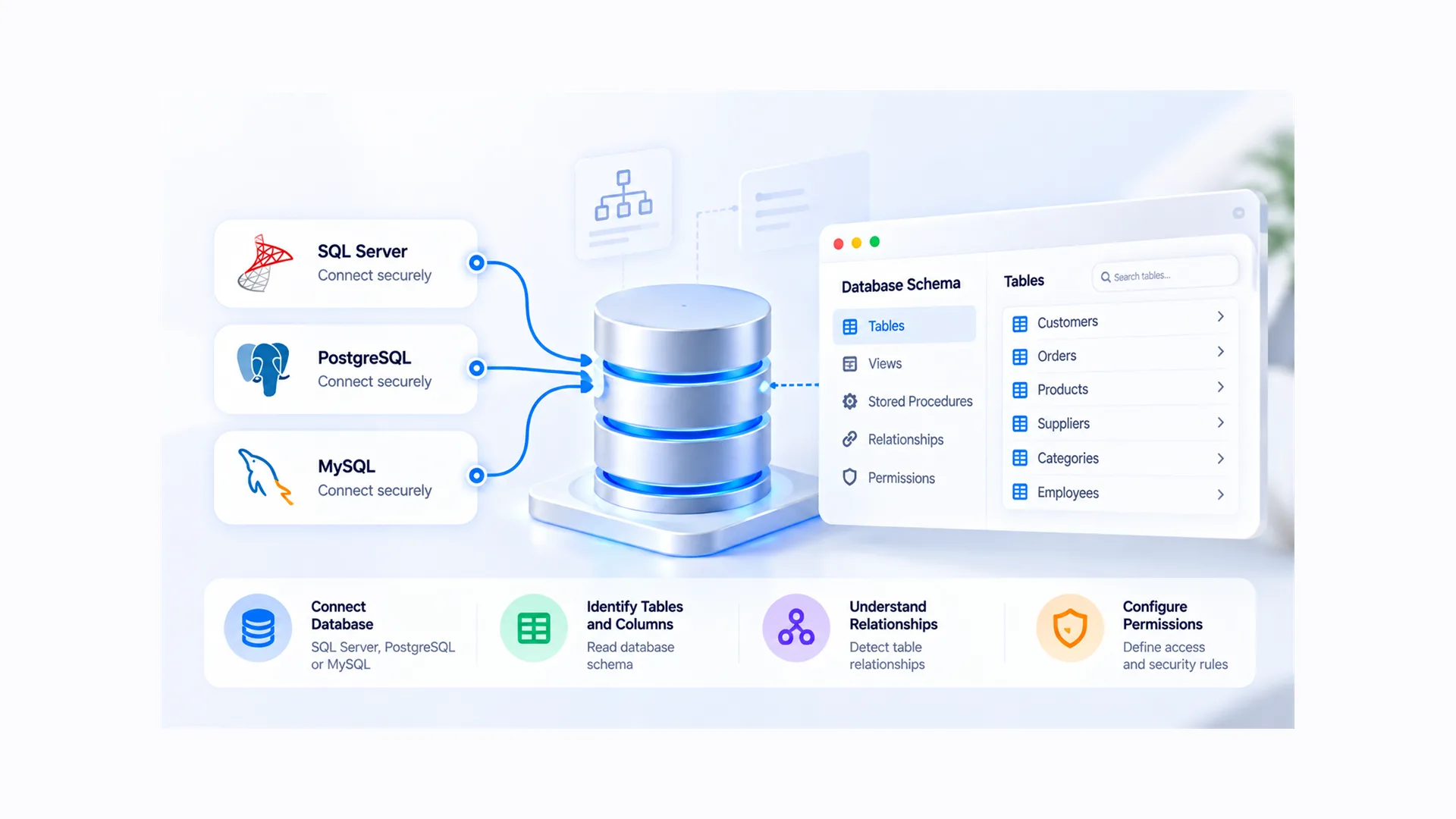
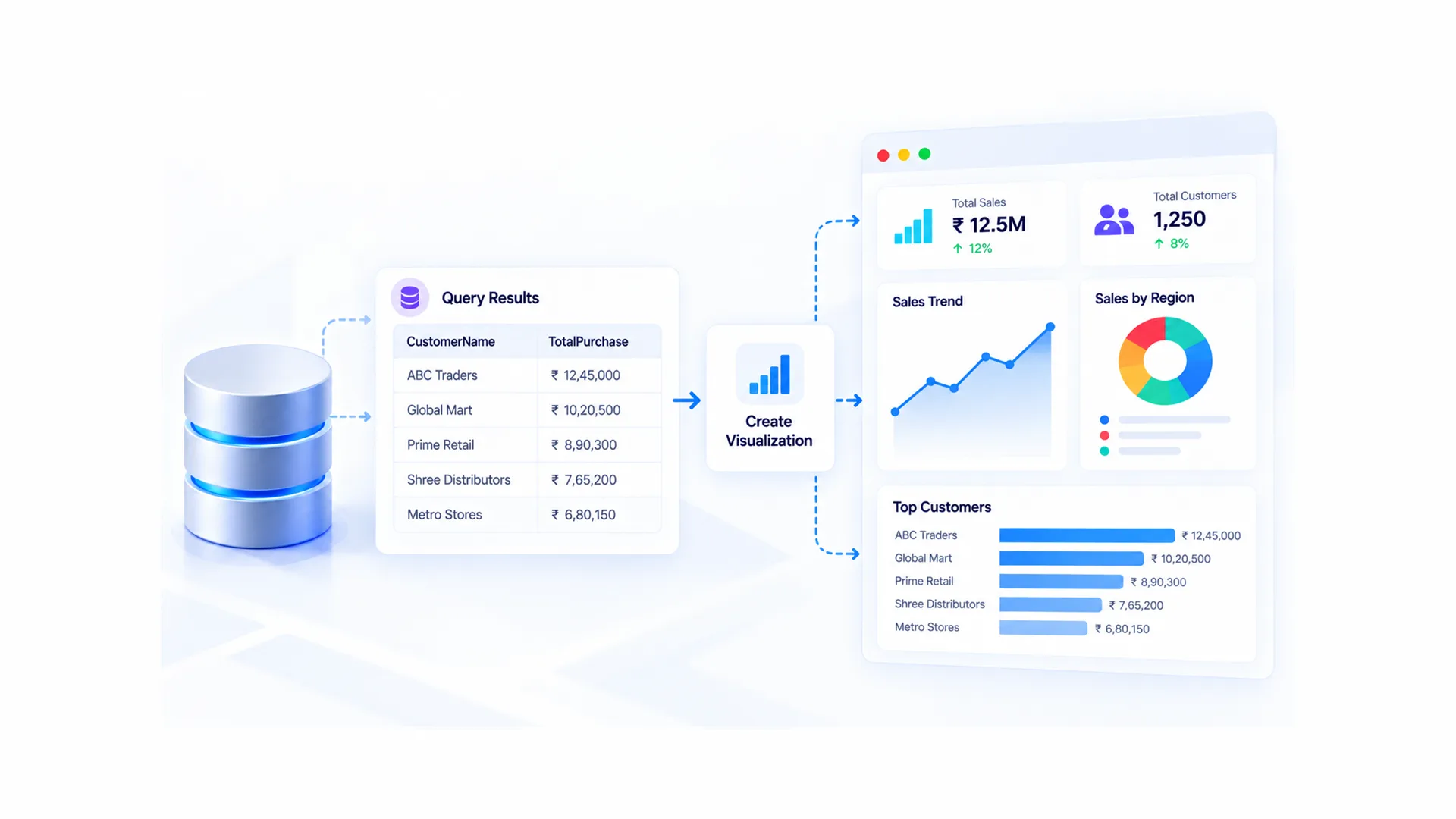
The first phase establishes the foundation required for natural-language database querying. We connect supported SQL databases (SQL Server, PostgreSQL, MySQL), identify tables and columns, extract schema metadata, configure credentials and access permissions, and define query execution rules.
Ingest schema relationships and business terminology into a catalog to maximize prompt accuracy.
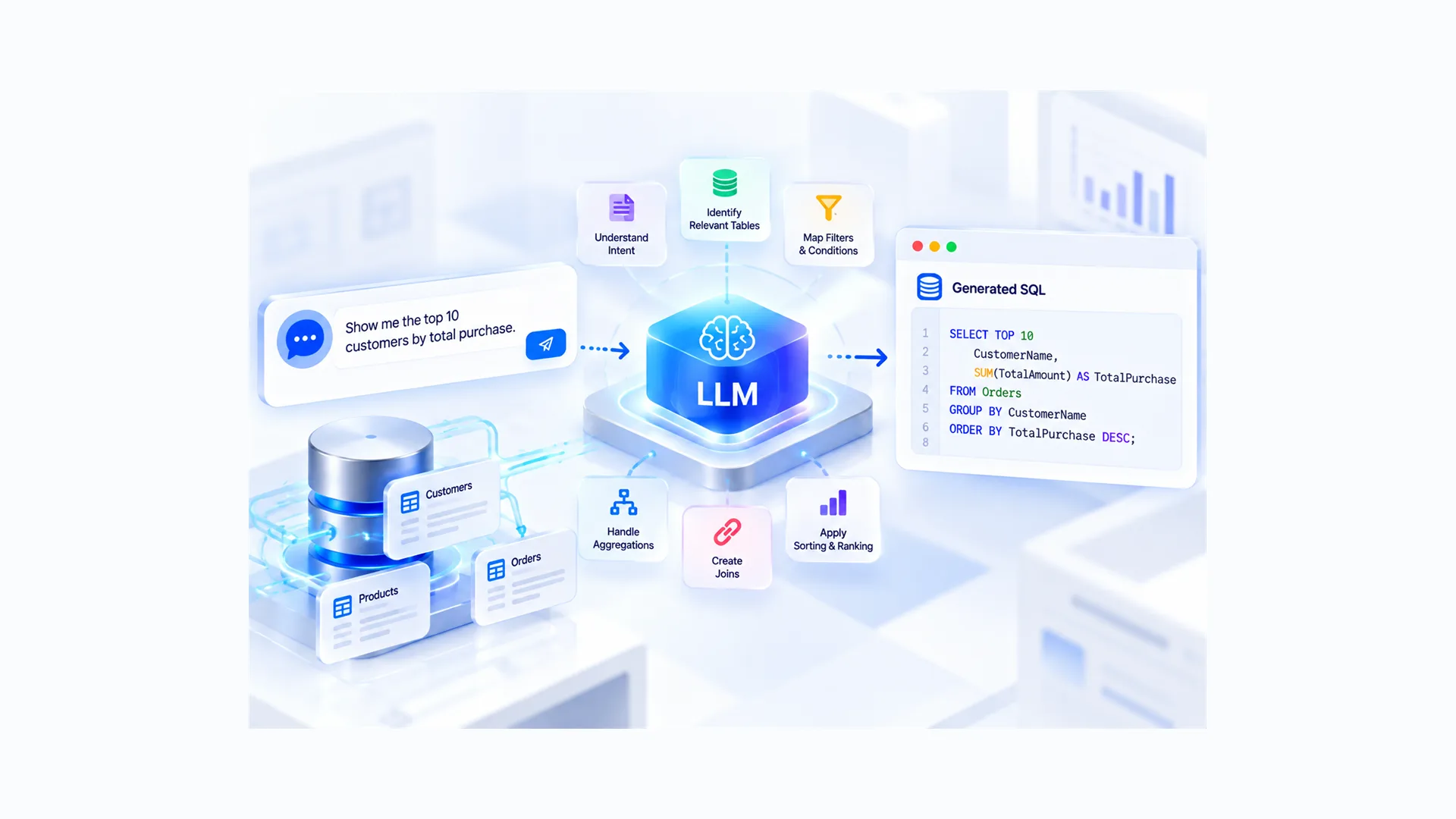
The system interprets natural-language questions (e.g. 'Show me the top 10 customers by total purchase') and translates them into SQL queries supporting filters, sorting, aggregations, grouping, joins, date calculations, and ranking.
Implement schema-aware query templates with dialect-specific syntax validation.
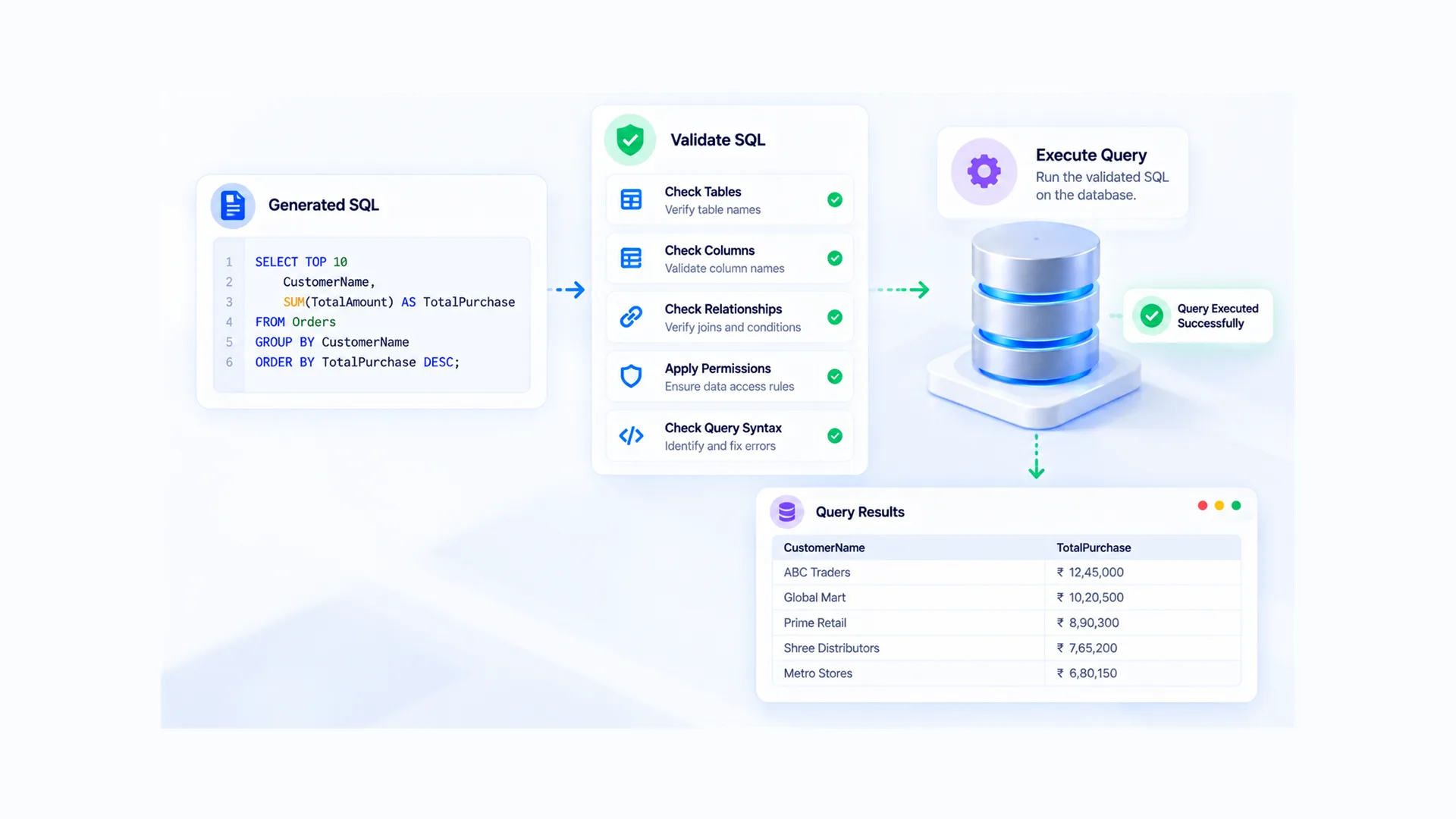
Generated queries are validated before execution to reduce invalid or unsafe database operations. The system checks table and column references, identifies syntax errors, applies access restrictions, executes approved queries, and retrieves structured results.
Enforce strict read-only execution guardrails to prevent accidental data modifications.
The final phase presents query results in a format users can easily understand: interactive data tables, automatic chart visualizations, follow-up conversation capabilities, query history logs, and instant spreadsheet export options.
Provide responsive tabular grids with automated chart recommendations and CSV/Excel exports.
Ask Questions. Get Database Results.
The interface provides a conversational way to interact with business databases - entering questions, previewing generated SQL, reviewing tabular data, and generating charts.
The Technology Behind Text to SQL
The following stack is a suggested architecture for developing a Text-to-SQL application. Suggested technologies only - final stack depends on target database, security requirements, and deployment environment.

Python Engine
Handles natural-language processing, query generation, validation, execution workflows, and backend services.

LangChain / Orchestration
Manages prompts, schema context, database interaction, and query-generation workflows.
Making Data Accessible Through Natural Language.
The proposed solution is designed to simplify access to structured business data while reducing repetitive SQL-writing requirements. Expected benefits - actual performance and usability should be validated against target workflows.
AI Development Case Studies With Measured Results
Read about our collaborative journeys with clients, showcasing how AtlasML's tailored AI solutions have empowered them to achieve their strategic goals.
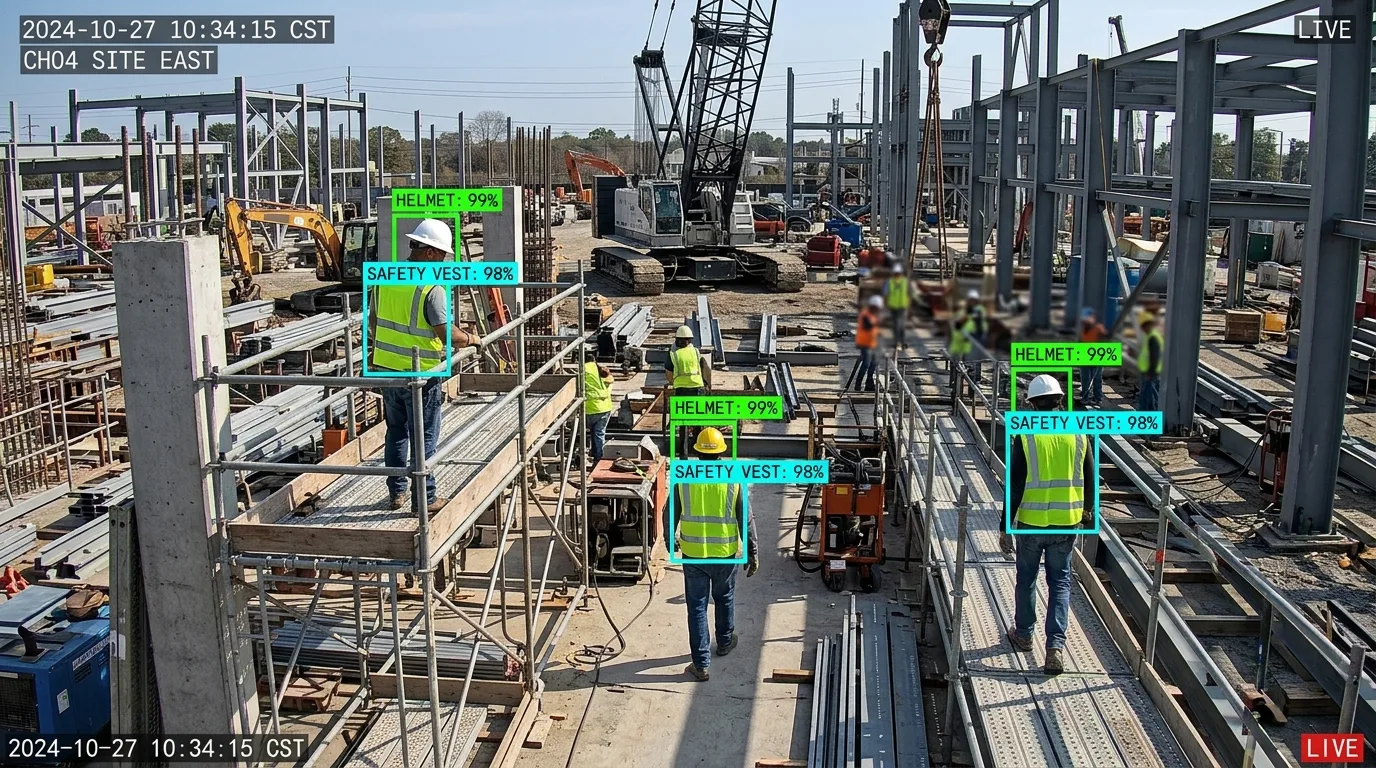
Intelligent PPE Detection & Workplace Safety System: Real-Time Computer Vision Across Active Industrial Jobsites.
An automated video monitoring system that uses existing factory and jobsite cameras to detect safety gear compliance in real time, reducing safety violations by 94% with instant alerts.

Loading & Unloading Monitoring System: Accurate Tracking & Shipment Verification.
A video-based monitoring solution using existing CCTV cameras and video analytics to track goods during loading and unloading, verify shipment quantities, and maintain clear records.
Don't Just Witness the AI Shift. Lead Your Organization's Transformation Journey Today.
We don’t just speculate on AI; we build it. Drawing on production systems delivered across 6 industries, we will analyze your requirement and architect a precise, executable technical blueprint for your team.
Schedule Your Technical Deep Dive
Got a Project For Us?
Skip the sales deck. Speak directly to an AI systems engineer about your data, models, and timeline.
The Engineering Guarantee, We do not route inputs through generic filters. A technical architect will review your project parameters and respond within 1 business day.
Let's Build Something Smart Together
Tell us about your data infrastructure and project goals. Our engineering team will review your requirements and provide a preliminary technical scoping framework within 24 hours.