Cement Bag Counting & Dispatch Monitoring System
Automated Counting · Production Visibility · Conveyor Monitoring · Dispatch Control
Cement Manufacturing · Construction Materials
2 Months
India
Making Cement Bag Counting Faster, Simpler, and More Reliable.
A camera-based cement bag counting and monitoring system designed to automate bag counting, track loading progress, and help cement manufacturers manage dispatch operations with greater visibility and control.

Bringing Automation to Cement Manufacturing and Dispatch Operations.
Cement manufacturing facilities handle large quantities of cement bags every day. Counting bags during conveyor movement and truck loading is an important part of ensuring that the correct quantity reaches its destination.
Traditional processes often depend on workers manually counting bags and maintaining dispatch records. As production volumes increase, managing these activities becomes more difficult and time-consuming.
The proposed system uses cameras installed at designated conveyor and loading points to identify and count cement bags automatically. The counting information is displayed on a centralized dashboard, allowing operators to monitor loading progress and maintain digital dispatch records.
The objective is to simplify daily operations, reduce manual counting efforts, and provide factory managers with a clear view of cement bag movement from production to dispatch.
Operational Challenges in Cement Bag Counting and Dispatch
Manual counting and limited visibility can create difficulties in high-volume manufacturing environments. The solution is designed to address key operational bottlenecks.

Manual Counting & Human Errors
Workers must count cement bags during conveyor movement and truck loading. High volumes and repetitive tasks can result in missed or duplicated counts.
Fast Conveyor Movement
Bags moving close together or overlapping can make it difficult to count each bag individually, particularly during continuous production.
Limited Loading Visibility
Dispatch supervisors may need to depend on operator updates to know how many bags have been loaded and whether the required quantity has been reached.
Fragmented Dispatch Records
Manually maintained registers and separate records can make it difficult to compare actual loading quantities with dispatch documents.
Four Phases. From Camera Installation to Automated Dispatch Monitoring.
The proposed implementation follows a structured approach to ensure that the counting system works reliably within the factory's existing operational environment.

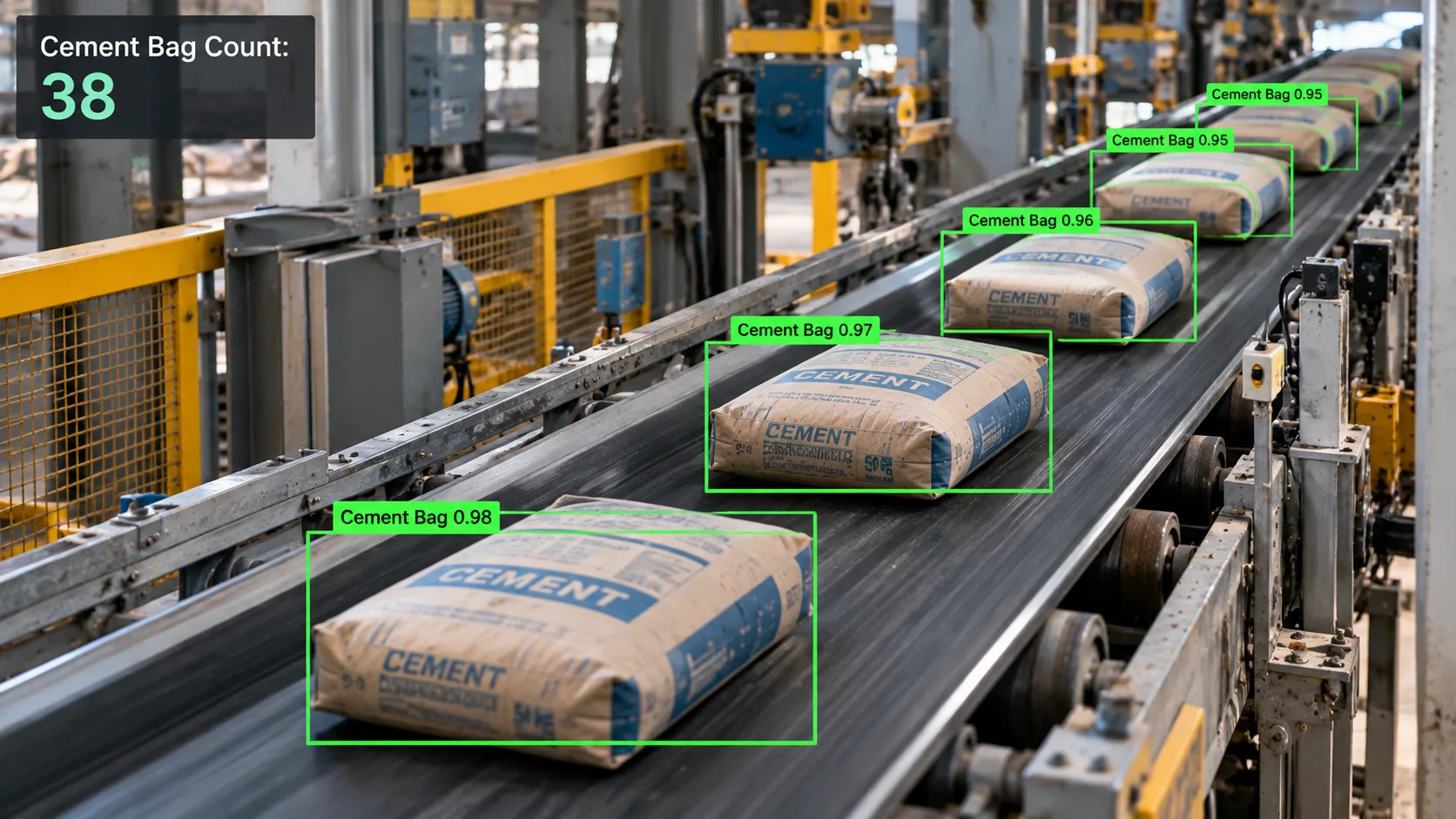
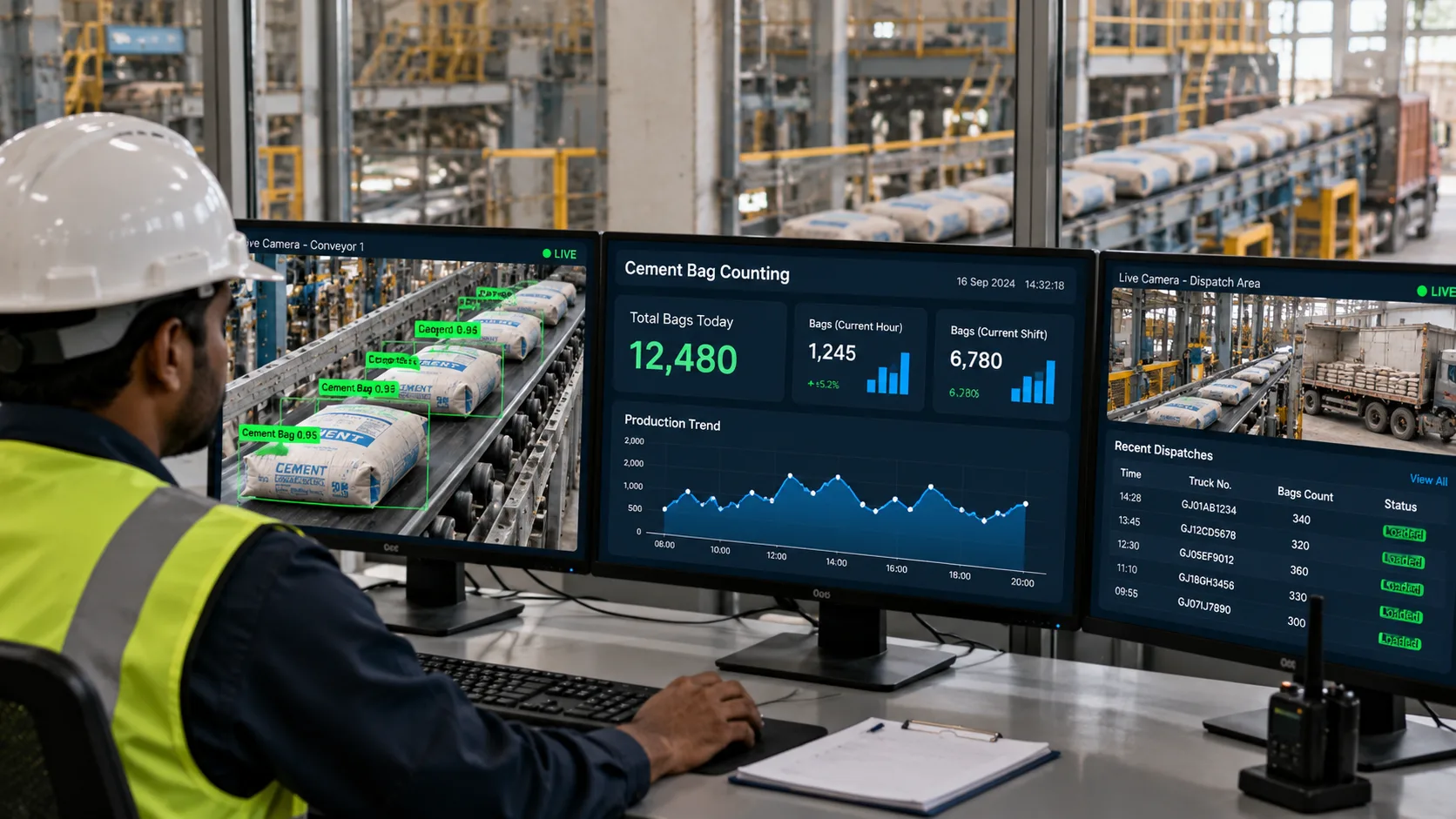

The first phase focuses on understanding the conveyor layout, bag movement, lighting conditions, and loading process. Identify suitable camera installation points, assess conveyor speed and bag spacing, configure the camera viewing area and counting zone, and evaluate lighting, dust, and potential obstructions.
Mount specialized optical cameras with anti-dust enclosures directly over conveyor transit points.
The system is configured to recognize cement bags and track their movement through the camera view. Identify individual cement bags from video frames, track bag movement to avoid counting the same bag multiple times, configure virtual counting lines, and validate counting behavior under different operating conditions.
Deploy custom bag detection with directional tracking algorithms to handle overlapping and high-speed bag flows.
A centralized dashboard provides operators and supervisors with access to counting information and loading progress. Display total bags counted and loading status, maintain dispatch-wise loading information, configure target quantities and loading completion indicators, and generate count summaries and historical reports.
Implement automated dispatch cutoff thresholds that alert loading dock operators the moment order targets are reached.
The final phase focuses on testing the system in the actual factory environment and preparing it for operational use. Test counting accuracy against manually verified quantities, validate performance at different conveyor speeds, configure camera and system interruption alerts, and integrate with existing dispatch or factory systems where supported.
Connected the counting system directly to factory inventory and dispatch software to automatically create digital delivery records.
The Camera, Detection & Monitoring Architecture
The technology stack is selected to support video processing, bag identification, counting, and integration with factory operations. Suggested technologies for the proposed solution - final stack and hardware will depend on deployment requirements.

Python Engine
Handles video processing, counting logic, and communication between system components.

OpenCV
Processes camera frames, defines counting zones, and supports image analysis.
Moving Towards More Organized and Efficient Cement Dispatch Operations.
The system is designed to help cement manufacturers improve the way bags are counted, loading is monitored, and dispatch records are maintained. Intended outcomes of the proposed solution - actual accuracy and operational improvements are established through deployment and testing.
AI Development Case Studies With Measured Results
Read about our collaborative journeys with clients, showcasing how AtlasML's tailored AI solutions have empowered them to achieve their strategic goals.
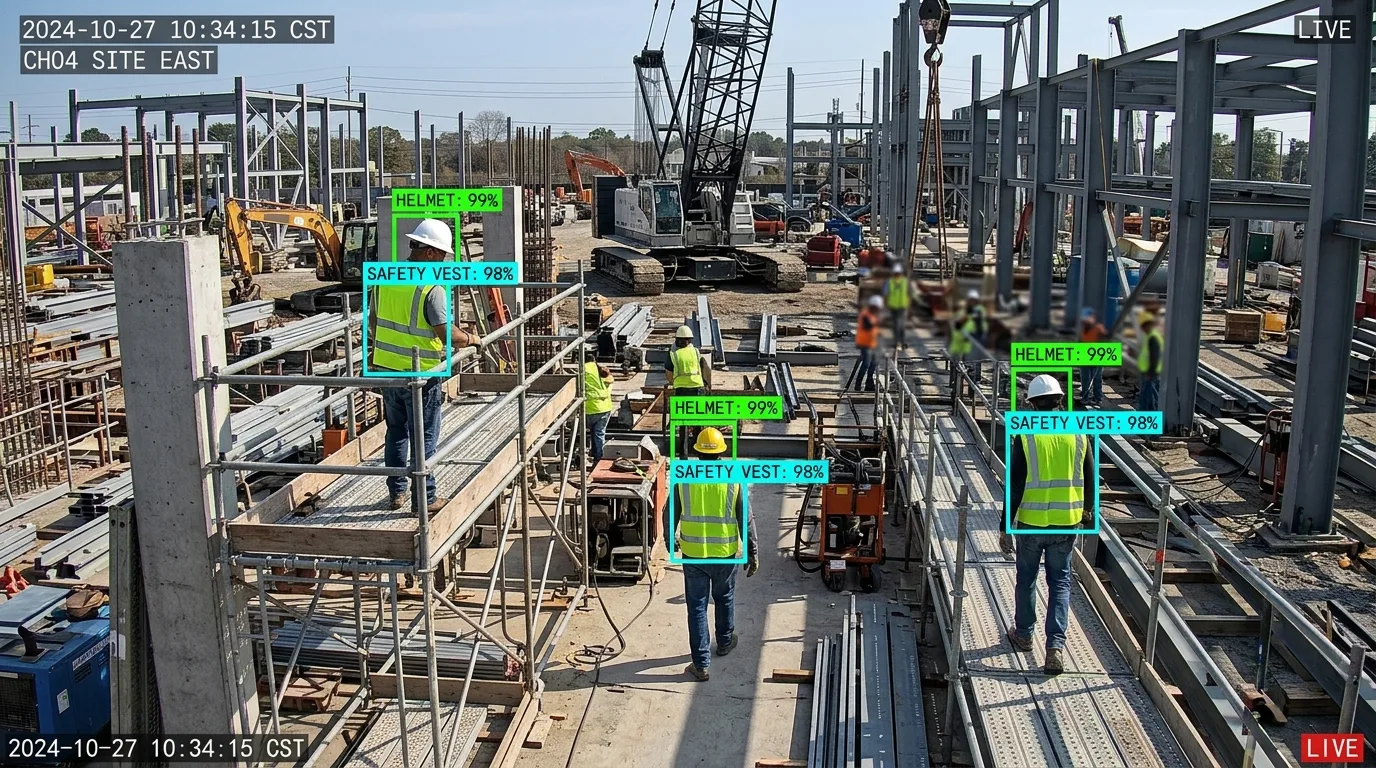
Intelligent PPE Detection & Workplace Safety System: Real-Time Computer Vision Across Active Industrial Jobsites.
An automated video monitoring system that uses existing factory and jobsite cameras to detect safety gear compliance in real time, reducing safety violations by 94% with instant alerts.

Loading & Unloading Monitoring System: Accurate Tracking & Shipment Verification.
A video-based monitoring solution using existing CCTV cameras and video analytics to track goods during loading and unloading, verify shipment quantities, and maintain clear records.
Don't Just Witness the AI Shift. Lead Your Organization's Transformation Journey Today.
We don’t just speculate on AI; we build it. Drawing on production systems delivered across 6 industries, we will analyze your requirement and architect a precise, executable technical blueprint for your team.
Schedule Your Technical Deep Dive
Got a Project For Us?
Skip the sales deck. Speak directly to an AI systems engineer about your data, models, and timeline.
The Engineering Guarantee, We do not route inputs through generic filters. A technical architect will review your project parameters and respond within 1 business day.
Let's Build Something Smart Together
Tell us about your data infrastructure and project goals. Our engineering team will review your requirements and provide a preliminary technical scoping framework within 24 hours.