
Introduction
Logistics companies handle thousands of packages, cartons, pallets and shipments every day. From warehouse storage to truck loading and final dispatch, every movement needs to be monitored accurately.
However, many logistics operations still depend on manual counting, paperwork, barcode scanning and traditional CCTV monitoring. These methods can create operational challenges, particularly when shipment volumes increase.
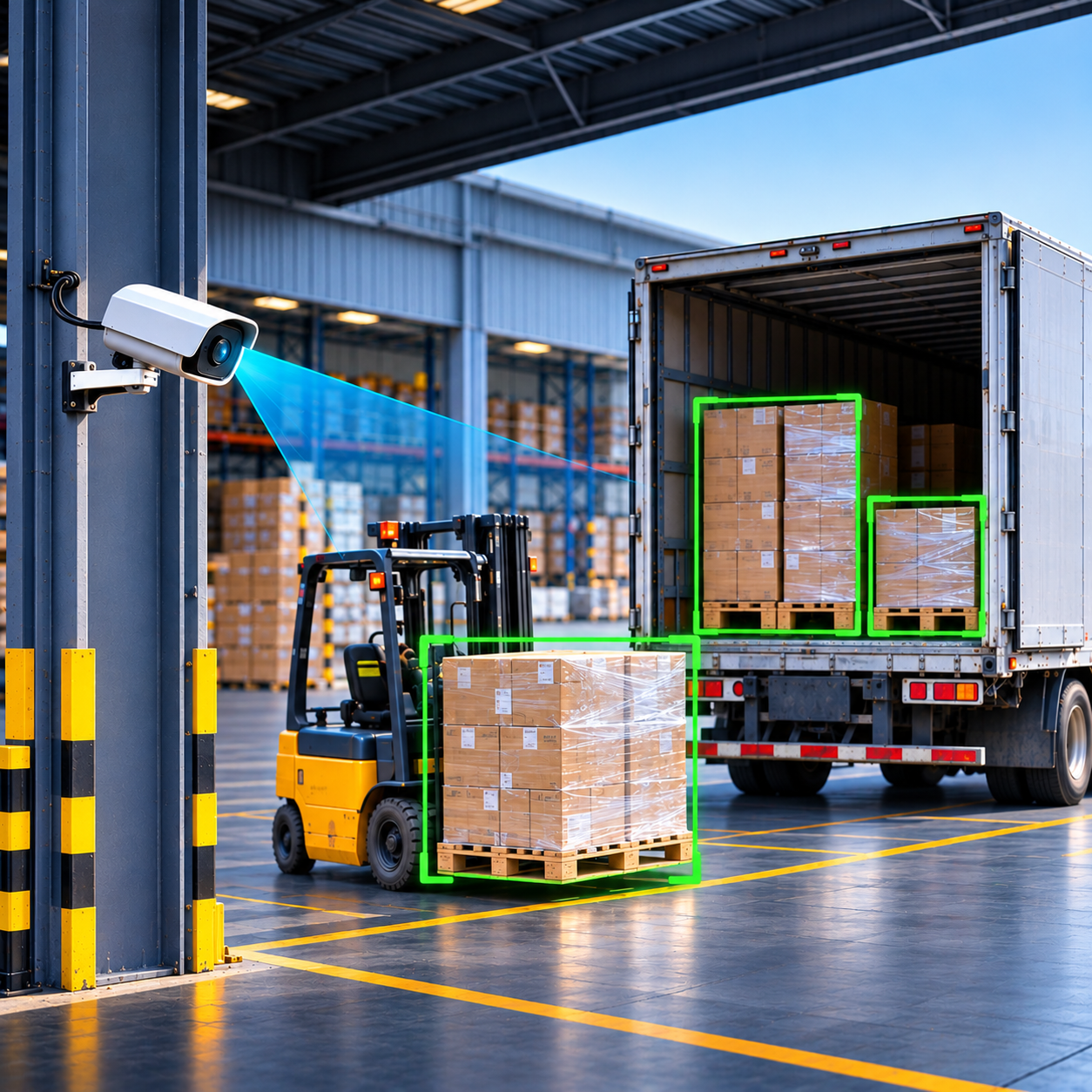
Computer vision is changing how logistics businesses monitor these activities. By analysing live CCTV footage and video streams, computer vision systems can detect objects, track goods, count packages and identify discrepancies during loading and unloading.
Instead of using cameras only for recording, businesses can turn existing camera infrastructure into a source of operational information.
1. Why Traditional Logistics Monitoring Is Challenging
Warehouse and transportation operations involve multiple activities happening simultaneously.
Some common challenges include:
Manual shipment counting: Employees count packages during loading and unloading, which can become difficult during high-volume operations.
Missing or extra goods: Differences between physical shipment quantities and delivery documents may go unnoticed.
Limited CCTV visibility: Traditional cameras record activities but do not automatically identify operational issues.
Delayed discrepancy detection: Teams may discover incorrect shipment quantities only after goods reach their destination.
Difficult investigations: Supervisors may need to review hours of CCTV footage to identify when a shipment issue occurred.
These challenges can affect dispatch accuracy, warehouse productivity and customer satisfaction.
2. How Computer Vision Works in Logistics
Computer vision analyses images and video streams to identify objects and understand their movement.
A logistics monitoring solution can connect with existing CCTV cameras installed at loading docks, warehouse entrances, storage areas and dispatch zones.
The system can then:
Capture video from connected cameras.
Detects cartons, boxes, pallets and other configured goods.
Track objects as they move through designated zones.
Count goods entering or leaving a loading area.
Compare actual quantities with expected shipment records.
Generate alerts when discrepancies are identified.
Store event records and video evidence for later verification.
This allows warehouse supervisors to monitor goods movement through a centralized dashboard.
3. Key Computer Vision Applications in Logistics
Automated Loading and Unloading Monitoring
Computer vision can monitor goods as they move between warehouses and transportation vehicles.
The system identifies configured items, tracks their movement and maintains loading or unloading counts.
Business benefits:
Reduced dependency on manual counting.
Better visibility into loading activities.
Faster identification of possible quantity discrepancies.
More structured shipment records.
Automated Shipment Verification
A computer vision system can compare the number of goods detected during loading with expected quantities from shipment records.
For example, if a delivery document specifies 500 cartons but the system records 495 cartons crossing the configured loading zone, it can flag the difference for supervisor verification.
Vehicle Entry and Exit Monitoring
ANPR (Automatic Number Plate Recognition) identifies vehicle registration numbers using cameras and OCR.
It can help businesses:
Record truck entry and exit.
Maintain vehicle movement history.
Verify registered transport vehicles.
Monitor gate activity.
Connect vehicle records with dispatch information.
Pallet and Package Tracking
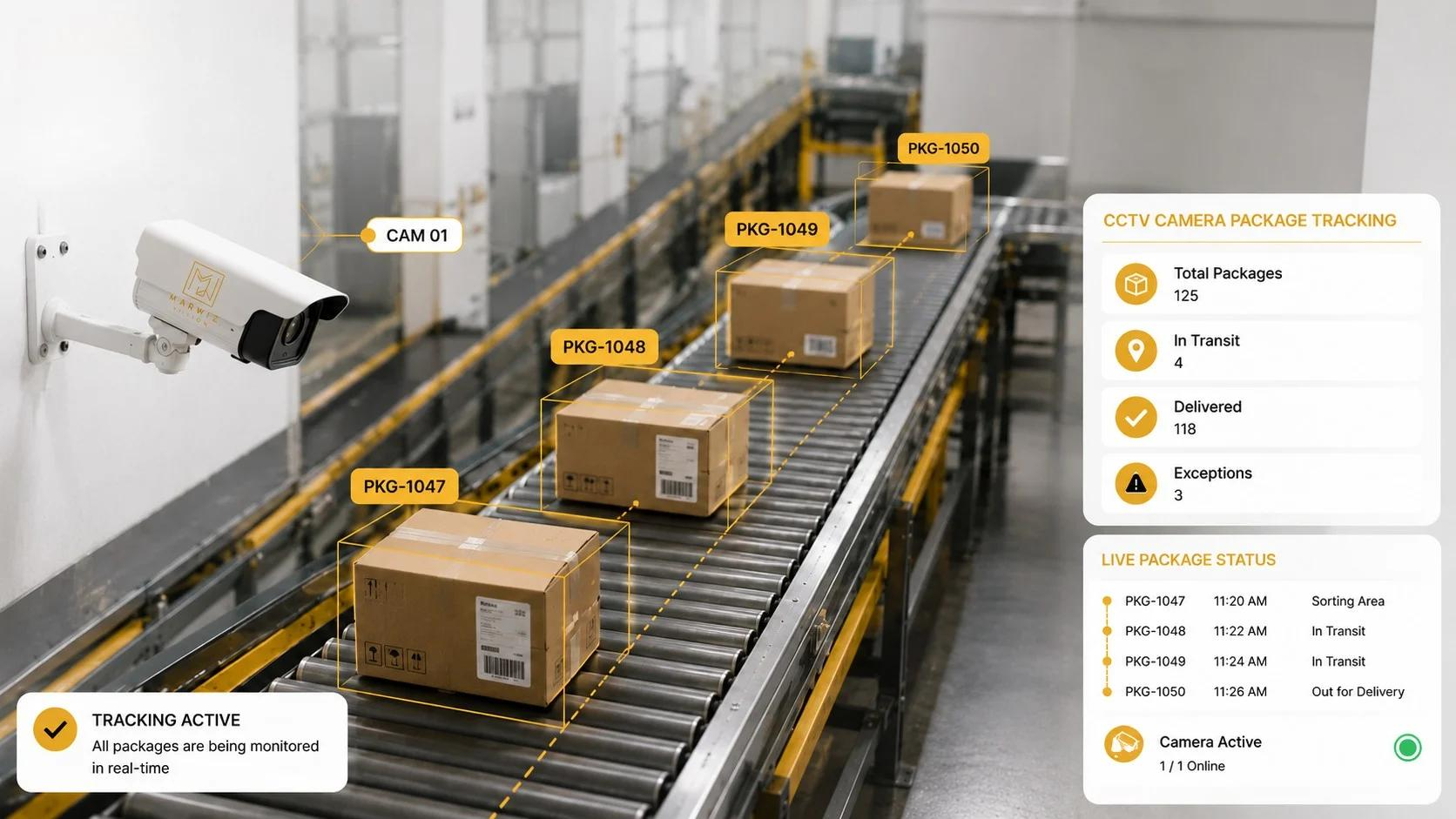
Object detection and tracking can identify configured packages and pallets as they move through warehouse zones.
This can support movement monitoring, operational visibility and inventory verification.
Loading Dock Activity Monitoring
Computer vision can monitor loading bay occupancy, vehicle movement and activity across designated operational zones.
It can help supervisors understand which loading areas are active and identify potential delays.
4. Real-World Case Study: Loading and Unloading Monitoring
A relevant implementation example is the Loading & Unloading Monitoring System developed by AtlasML.
The solution focuses on improving warehouse visibility by using existing CCTV infrastructure and video analytics.
The business challenge
Warehouses need to monitor large quantities of goods moving between storage areas, loading docks and transportation vehicles. Manual counting and passive CCTV recording can make shipment verification difficult.
The proposed solution
The system uses camera feeds and computer vision to:
Detect and count configured goods.
Track movement through loading and unloading zones.
Compare actual quantities with expected shipment details.
Provide a centralized monitoring dashboard.
Maintain event history and video evidence.
Implementation approach
The project is structured into four phases:
Camera and site assessment.
Goods detection and movement tracking.
Shipment verification and dashboard development.
Deployment, testing and validation.
Read the complete case study:
https://atlasml.ai/case-studies/loading-unloading-monitoring-system
5. Technologies Used in Computer Vision Logistics Solutions
A typical implementation can involve:
Python: Video processing and backend logic.
OpenCV: Camera stream and image processing.
YOLO: Object detection and classification.
Object Tracking: Monitoring goods and vehicles across video frames.
OCR: Reading vehicle registration numbers and relevant visual text.
REST APIs: Connecting vision systems with ERP, WMS and transport management software.
Web Dashboard: Monitoring counts, shipment events and alerts.
The final technology selection depends on camera quality, operational conditions, object types and business requirements.
6. What Does a Logistics Monitoring Dashboard Show?
A centralized dashboard can provide:
Total loading and unloading counts.
Vehicle registration details.
Shipment identification.
Expected versus detected quantities.
Loading and unloading status.
Discrepancy notifications.
Timestamped video records.
Daily and monthly operational reports.
This gives managers better visibility into warehouse and transportation activities.
7. Business Benefits
Computer vision can help logistics businesses improve operational control through:
Operational Area | Potential Benefit |
Goods counting | Less manual counting |
Shipment verification | Easier quantity reconciliation |
CCTV monitoring | Automated event detection |
Vehicle monitoring | Structured entry and exit records |
Warehouse operations | Better activity visibility |
Auditing | Searchable event history |
Actual performance depends on camera placement, lighting, occlusion, object types and system validation.
Conclusion
Computer vision is becoming an important technology for logistics companies looking to improve shipment visibility, warehouse monitoring and transportation operations.
From automated goods counting to vehicle identification and dispatch verification, camera-based monitoring can help businesses turn everyday operational footage into useful information.
The opportunity is not simply to install more cameras. It is to make existing camera infrastructure more useful through intelligent video analysis.
Looking to automate your logistics operations?
atlasml.ai develops custom computer vision, video analytics and business automation solutions for logistics, warehousing and transportation companies.
Contact our team to discuss your requirements.